Friday, January 25, 2013

Rich McCoy Custom Pedal Board - Part 2

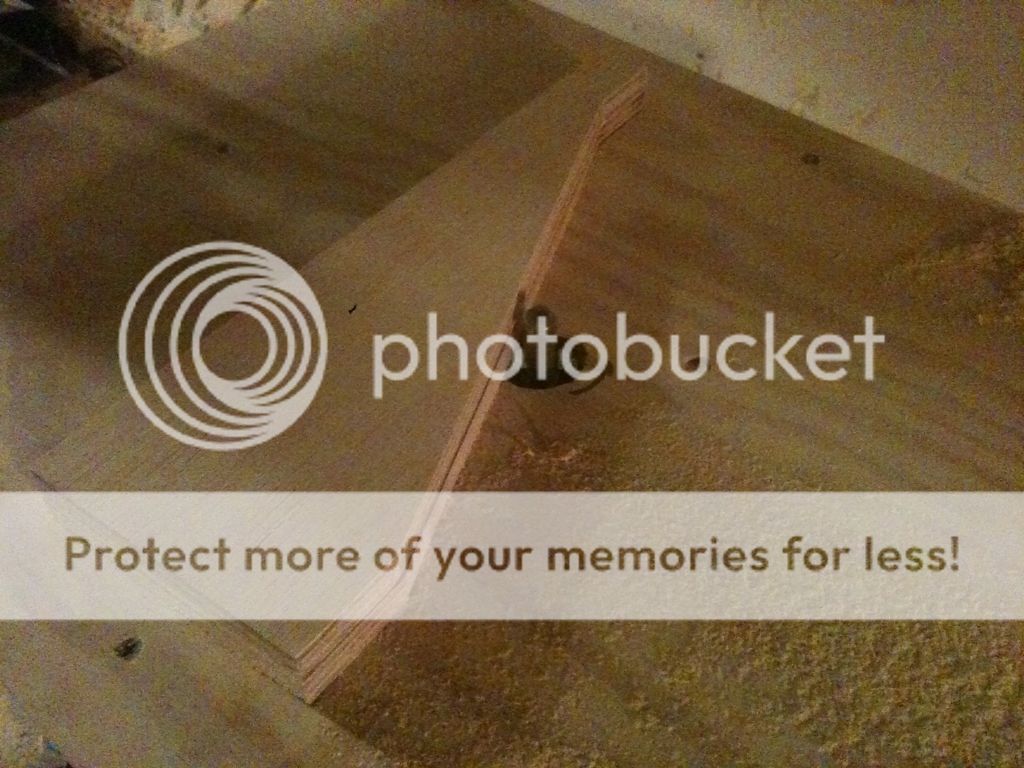
To finish the sides, I need to get the angles to fit together. So to exactly duplicate the first side I completed, I used that same side as a template for all the others. I used double-sided carpet tape to secure the template onto the rough cut sides, then used my router to duplicate the edge exactly.


From there I can go on to assembling the two halves of the box. Using 1.75" wire brads, I tacked all the pieces together.

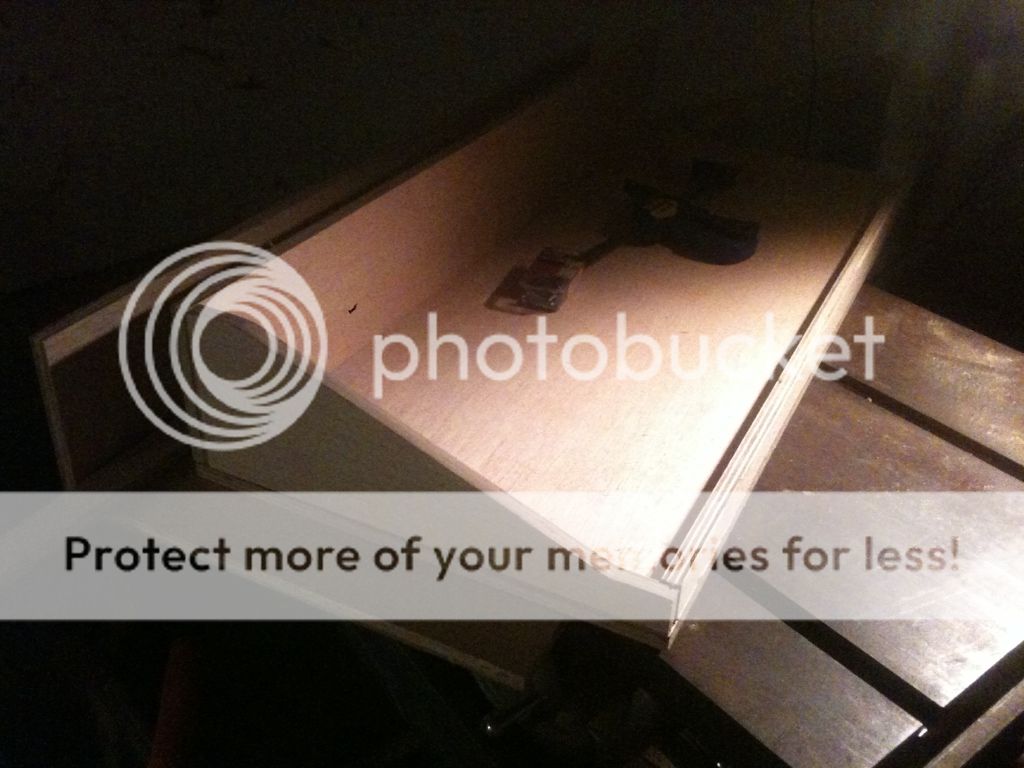



Test fit the top...


Next I'll cover the plywood with thick, black contact paper, and put angle aluminum stock from Lowe's or Home Depot along the edges. This will reinforce and protect the joints from any damage that could occur in handling. On the inside of the top I'll install some 1" thick foam to pad the top of the pedals and keep them from coming loose when the lid is on.

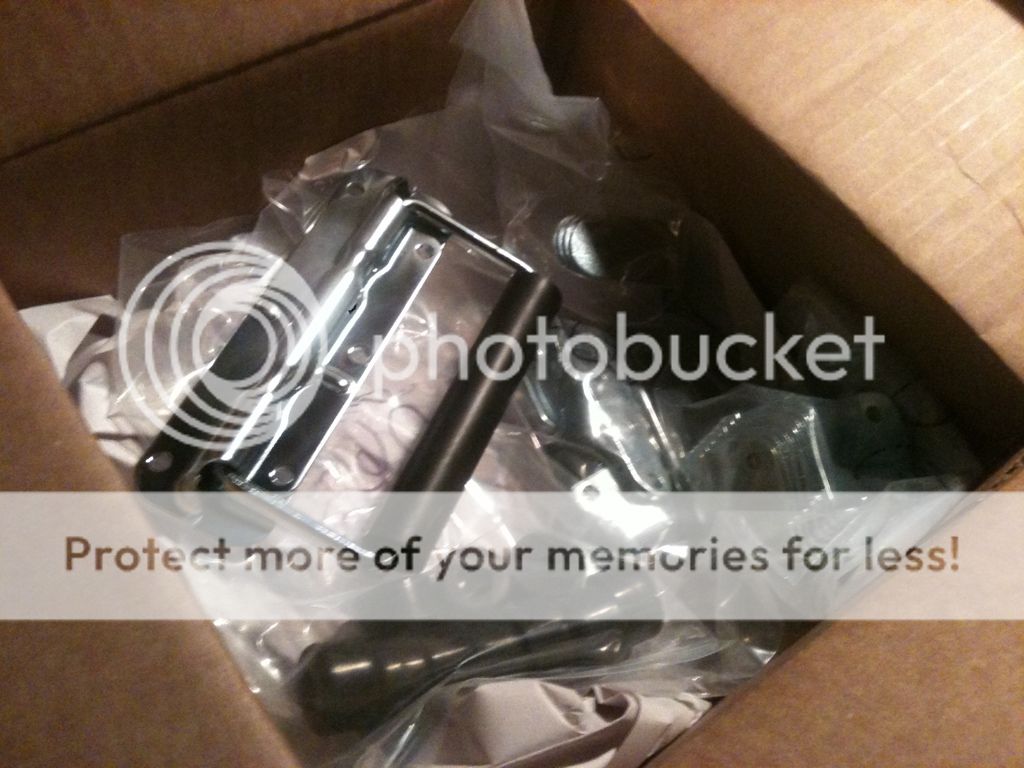
For hardware I ordered the handle, latches, corner pieces and rubber feet from Reliable Hardware. Shipping was a bit steep for the few things I ordered, but they're still the cheapest place that I've found. And all their hardware is made in the USA, so that's a plus.


Rich McCoy Custom Pedal Board - Part 1

Recently the electric guitarist from my church came to me, asking if I could build him a pedal board. He  explained that he'd recently bought a TC Electronics G-system as a second rig.


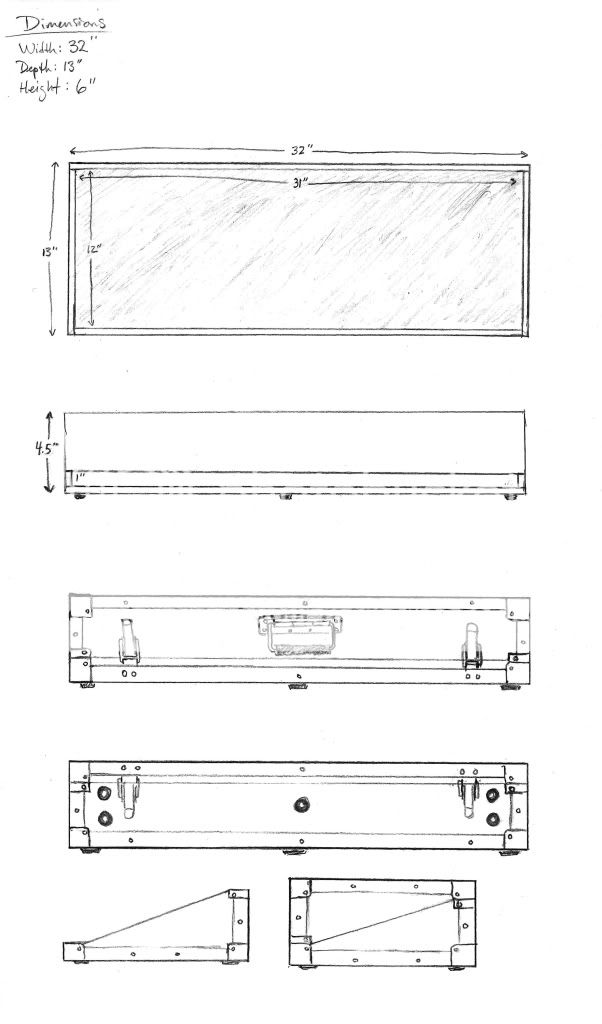
The brain of the G-system will be housed in a rack, along with a couple other pedals, but he wanted a custom board and case for the foot controller and 2 volume/expression pedals. Since the G-system is already angled, he didn't want the board itself to be angled. After some thought we decided to combine the pedal board and road case into one unit–the pedals would attach to the bottom half the case and the upper half would be removable. He sent me some measurements of the footprint of the equipment and I drew up a plan.


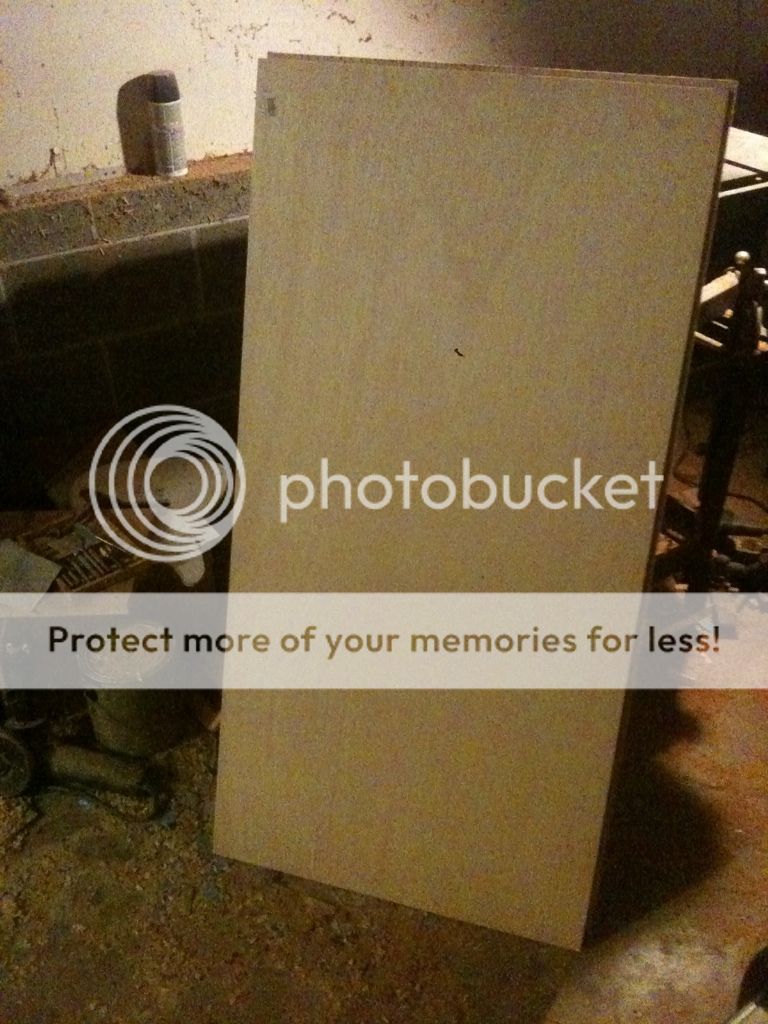
After a quick run to Home Depot for plywood, I got started.

Cut most of the pieces with my table saw, except for the large top and bottom sections that I cut to length with a circular saw.

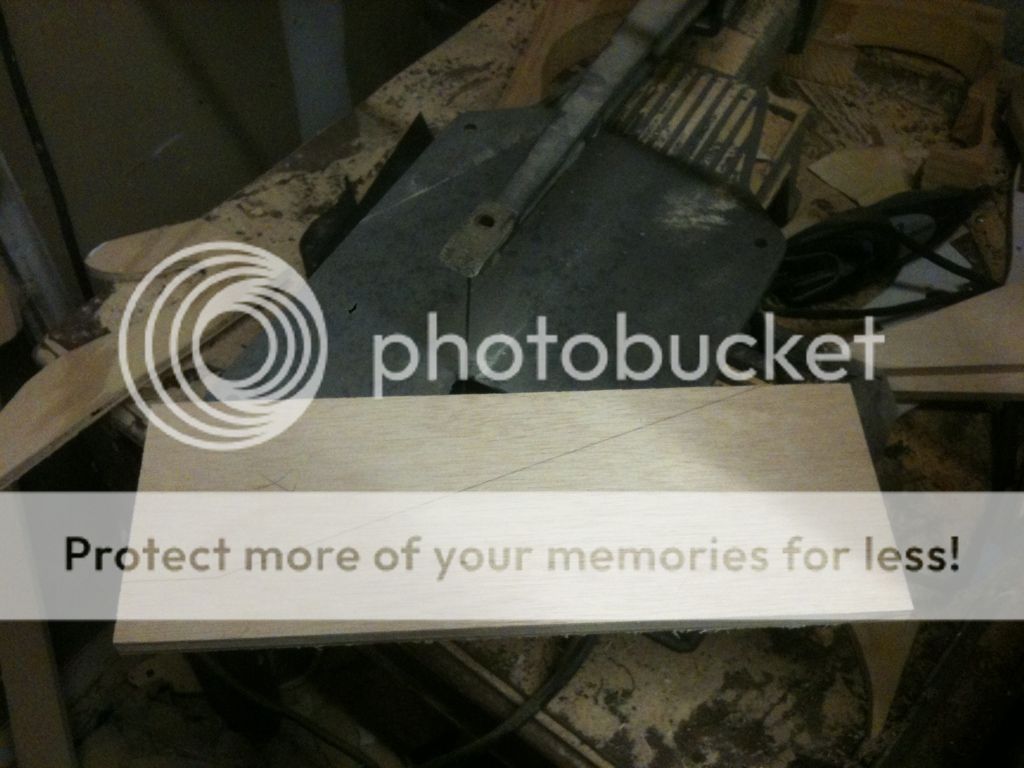
As you can see in the drawing, the sides are mostly angle, and I can't just run them through the table saw. So I measured out my pattern and drew in on the wood, then took it over to my scroll saw and cut just outside my lines.


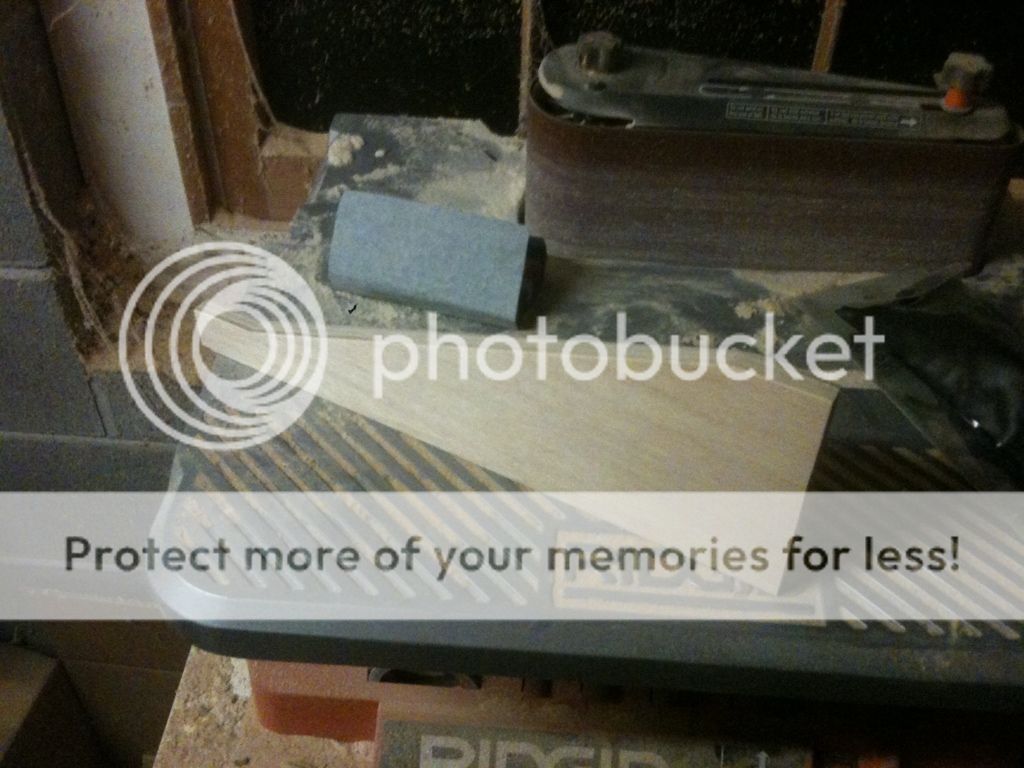
I then sanded the edge down even with the line by hand.


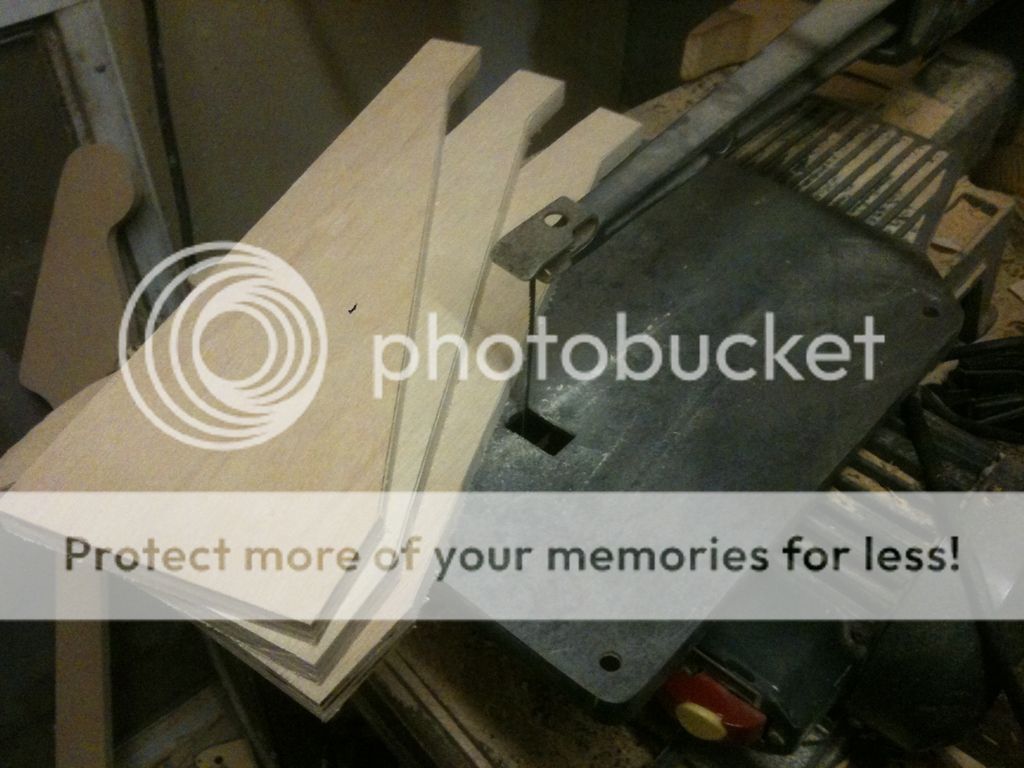
Traced the angle of the finished side piece on the other 3 sides, then rough cut those out on the scroll saw.